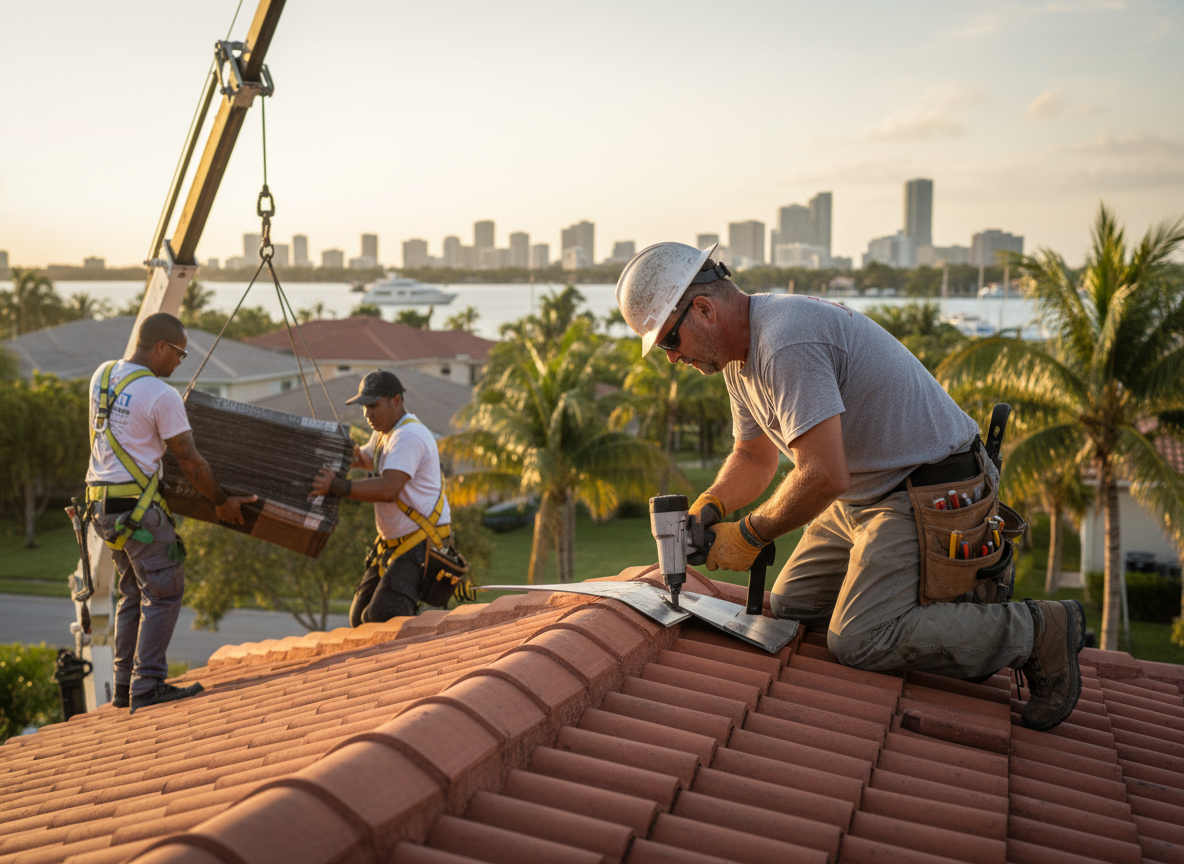
Cutler Bay homes built before the 2002 Florida Building Code updates often carry older asphalt shingle or barrel tile systems that fail at the underlayment when storm-driven rain pushes water under the laps. Miami-Dade County wind-borne debris requirements now mandate specific fastening patterns and impact-rated materials on any roof section replaced after a claim. Crews working from the 20507 S Dixie Hwy shop routinely inspect for hidden deck rot along the east-facing slopes where afternoon storms hit hardest.
Flat and low-slope sections common on 1970s-1980s ranch homes near Old Cutler Road need tapered insulation and modified bitumen or TPO membranes to handle ponding that develops after prolonged summer rains. Tile roofs in the area shift when hurricane clips loosen over time, allowing wind-driven water into the attic. Proper counter-flashing at stucco walls and skylights prevents the leaks that appear months after the storm passes.
Daily heat and salt air from the nearby coast accelerate granule loss on shingles and crack the mortar on ridge tiles. Replacement jobs require matching existing tile profiles to satisfy HOA rules in communities like Cutler Cay and Lakes by the Bay. Every project starts with a full perimeter check for soffit and fascia damage that can pull new roofing out of alignment.
Technician insight
In Cutler Bay the thing that catches most people out with Best roofing contractor is the hidden rot along the north and east edges on homes built in the 1980s near the canals. Afternoon storms dump water that sits under lifted tiles for weeks before anyone notices, and once the deck softens the whole job changes from a simple re-roof to a partial deck replacement.
Tile Shift After Summer Storms
A Cutler Bay homeowner noticed water stains along the living room ceiling after repeated afternoon rains. Inspection revealed several barrel tiles had slipped on the east slope because the original hurricane clips had corroded. Crews removed the loose tiles, replaced the damaged underlayment and clips, and reinstalled matching tile so the roof passed the next wind test without further intrusion.
How it works
- 1
On-Site Inspection
Technician measures all roof planes, checks deck condition, and notes wind code compliance items at the Cutler Bay address.
- 2
Material Selection
Review impact-rated options that meet current Miami-Dade product approval lists and match the home's existing look.
- 3
Permit and Scheduling
Pull required county permits and coordinate start date around forecast weather windows.
- 4
Installation and Final Walk
Complete tear-off or overlay, install new system with proper flashing, then walk the roof with the homeowner to verify every detail.
Pricing
Upfront written quotes after inspection; final price reflects roof size, pitch, and any deck repairs found on site.