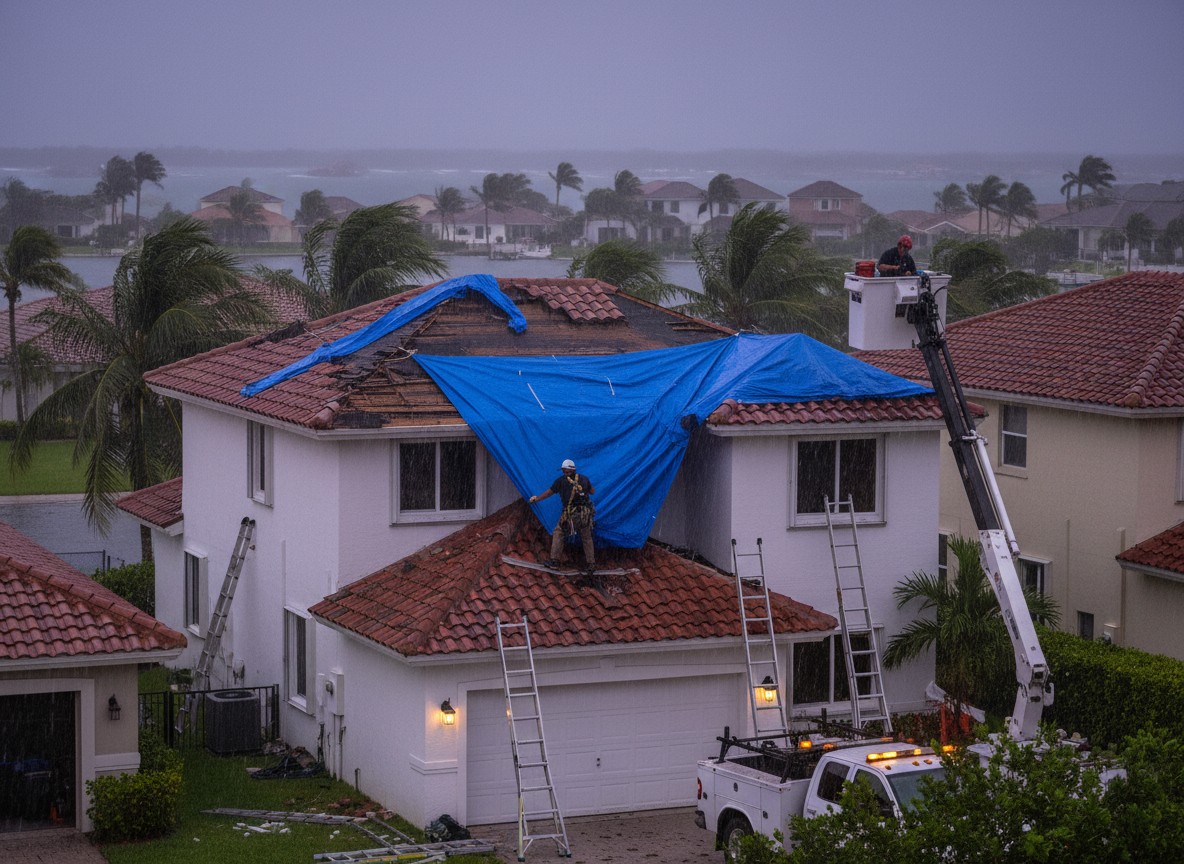
Cutler Bay homes, many built in the 1970s through 1990s with concrete tile roofs, face frequent emergency calls after summer thunderstorms and tropical systems move through Miami-Dade County. Wind-driven rain often penetrates at ridge vents, pipe boots, and valley flashings that have aged and lost flexibility. A single displaced tile during high winds can allow water to reach the underlayment within minutes, especially on south-facing slopes that catch the prevailing storms.
Emergency work here requires immediate temporary measures such as reinforced tarping over damaged sections to prevent interior water damage to ceilings and insulation. Full repairs then address the root cause, whether that is impact from falling branches common in older tree-lined streets or degraded sealant around skylights. Matching replacement tiles must be sourced carefully because many pre-1992 installations used profiles no longer stocked locally, and mismatched materials stand out under the intense Florida sun.
Miami-Dade County building requirements for roof repairs after declared storms include updated fastening schedules and secondary water barriers on re-covered sections. Skipping these steps during rushed emergency fixes can lead to insurance claim denials later. Crews working at night or in heavy rain must also account for slick tile surfaces and limited visibility while securing tarps against gusts that can exceed 40 mph even outside named storms.
Technician insight
In Cutler Bay, the thing that catches most people out with Emergency roofing service is how fast wind-driven rain slides under the edges of older concrete tiles on 1980s homes in neighborhoods like Cutler Ridge once the original foam adhesive starts to fail.
Tropical storm leak on older tile roof
Heavy overnight rain from a passing system entered through lifted tiles on a south-facing slope of a 1980s Cutler Bay home. Inspection showed failed underlayment and displaced ridge tiles. Temporary tarps stopped the intrusion, followed by replacement of the damaged section with matching tiles and new flashing.
How it works
- 1
Initial Call And Dispatch
Answer within minutes, gather details on the leak location and weather conditions, then send a crew from the Cutler Bay base.
- 2
On-Site Safety Assessment
Inspect from the ground and attic where safe, identify active water entry points, and confirm structural stability before any roof access.
- 3
Temporary Protection
Install reinforced tarping or emergency flashing to stop water intrusion while permanent materials are prepared.
- 4
Permanent Repair
Replace damaged tiles, flashings, or underlayment sections with matching components and restore the roof to a watertight condition.
Pricing
Upfront quotes provided after on-site inspection; cost depends on extent of damage, roof access, and material availability.