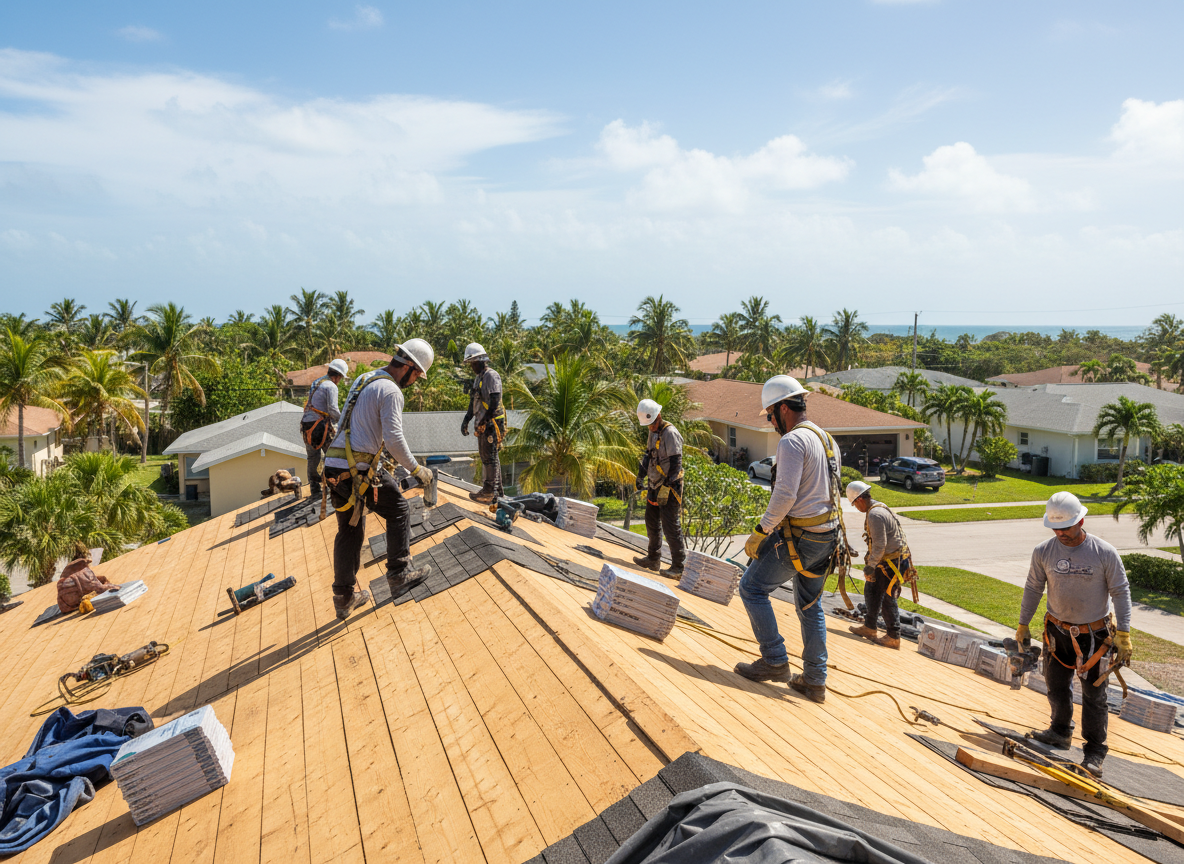
Cutler Bay homes, many built between the 1960s and 1980s in neighborhoods like Cutler Ridge and Lakes by the Bay, often carry asphalt shingle or concrete tile roofs that must meet Miami-Dade County’s strict wind-load requirements. Replacement jobs here routinely involve upgrading to impact-rated underlayment and fasteners rated for 150 mph winds because standard materials fail during tropical storms. Salt air from nearby Biscayne Bay accelerates corrosion on flashing and vents, so crews inspect and replace galvanized components with stainless or coated alternatives to prevent leaks years later.
Heavy seasonal rains combined with flat or low-slope sections on ranch-style homes create chronic ponding issues around skylights and HVAC curbs. A roofing contractor working in this area checks for deteriorated felt underlayment that has absorbed years of moisture, especially on east-facing slopes where afternoon storms hit hardest. Proper ventilation upgrades during re-roofing reduce attic heat and moisture buildup that otherwise shortens shingle life in the humid subtropical climate.
When storms pass, crews focus on hidden damage such as lifted shingles along eaves or compromised synthetic underlayment that allows water intrusion into the plywood deck. Addressing these details before they reach interior ceilings keeps small repairs from turning into full replacements. Local permitting through Miami-Dade requires specific product approvals and inspection stages that experienced crews factor into every job timeline.
Technician insight
In Cutler Bay the thing that catches most people out with Local roofing contractor work is how quickly salt air and standing water destroy standard flashing on 1970s ranch homes. Homeowners often skip checking the underlayment during a simple shingle swap, then discover the deck has rotted when the next heavy rain hits from the east.
Post-storm leak on older Cutler Bay roof
After a summer storm, water stains appeared on ceilings in a 1978 ranch near 205th Street. Inspection showed lifted shingles and failed synthetic underlayment along the east eaves. Crew replaced the compromised section with impact-rated underlayment and stainless flashing, then matched the existing shingles to restore the roof without a full replacement.
How it works
- 1
Site Assessment
Inspect roof condition, decking, and flashing while noting Miami-Dade wind code compliance needs.
- 2
Material Selection
Recommend impact-rated shingles or tiles suited to Cutler Bay’s exposure and existing home architecture.
- 3
Permit And Scheduling
Handle county permitting and coordinate work around typical afternoon storm patterns.
- 4
Installation And Final Inspection
Complete tear-off or overlay, install per code, then schedule required Miami-Dade inspections.
Pricing
Upfront quotes issued after on-site inspection; final cost depends on roof size, pitch, and material choice.