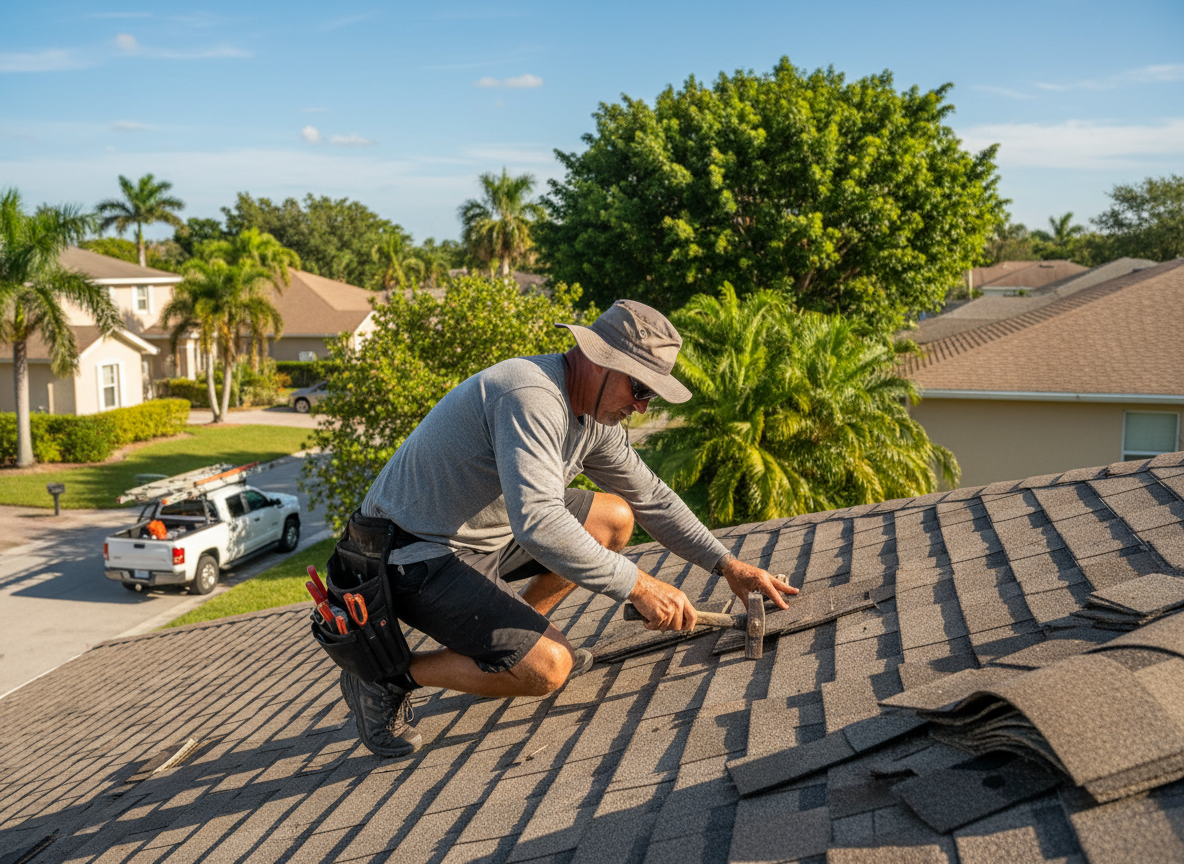
Cutler Bay homes, especially those built in the 1970s through 1990s in neighborhoods like Cutler Ridge and Bel Aire, often feature concrete tile roofs that suffer from cracked or displaced tiles after repeated summer thunderstorms. High humidity accelerates sealant breakdown around vents and valleys, allowing water intrusion that travels along the underlayment before showing inside. Miami-Dade wind-load requirements mean any repair must restore the roof's ability to handle gusts without creating weak points that later fail during hurricane season.
Flat or low-slope sections common on additions and carports in the area demand different approaches than pitched tile roofs. Modified bitumen or TPO membranes can blister from trapped moisture if prior repairs used incompatible materials. Technicians must check for ponding near scuppers and ensure proper slope restoration so water does not sit against walls during the frequent afternoon downpours that define south Miami-Dade weather.
Edge cases include hidden rot in plywood decking where previous owners applied multiple layers of sealant instead of addressing the source. Code updates after major storms now require specific underlayment and fastening schedules that older roofs lack. Matching existing tile profiles and colors from local suppliers keeps repairs invisible while meeting current fastening standards that reduce blow-off risk.
Seasonal Considerations
Heavy May-to-October rains test every seam and fastener. Homeowners should schedule inspections before peak season rather than waiting for visible interior stains. Salt-laden air from nearby Biscayne Bay can corrode metal flashings faster than inland areas, requiring stainless or coated replacements on coastal-edge properties.
Technician insight
In Cutler Bay, the thing that catches most people out with Roof repair is how the original Cutler Ridge subdivisions have multiple layers of old sealant over previous leaks; once we open the roof the decking is often soft and the job expands beyond the visible stain.
Tile and Flashing Repair After Afternoon Storm
Homeowner in Cutler Bay reported ceiling stains following a heavy rain. Inspection revealed cracked tiles and failed step flashing around a bathroom vent on a 1980s concrete-tile roof. We removed damaged tiles, replaced the flashing with corrosion-resistant metal, and reinstalled matching tiles with updated fasteners. Interior stains stopped and no further intrusion occurred during subsequent storms.
How it works
- 1
On-Site Assessment
Inspect roof surface, underlayment, and attic for active leaks and prior repairs using moisture meters and binoculars from safe vantage points.
- 2
Damage Documentation
Photograph affected tiles, flashings, and decking, then note any code upgrades needed for the repair area.
- 3
Targeted Repair
Remove damaged materials, replace underlayment where compromised, reinstall matching tiles or membrane sections, and seal all penetrations.
- 4
Final Water Test
Hose test repaired sections to confirm no new intrusion points before leaving the site.
Pricing
Upfront quotes after inspection reflect actual damage extent, material type, and access conditions.