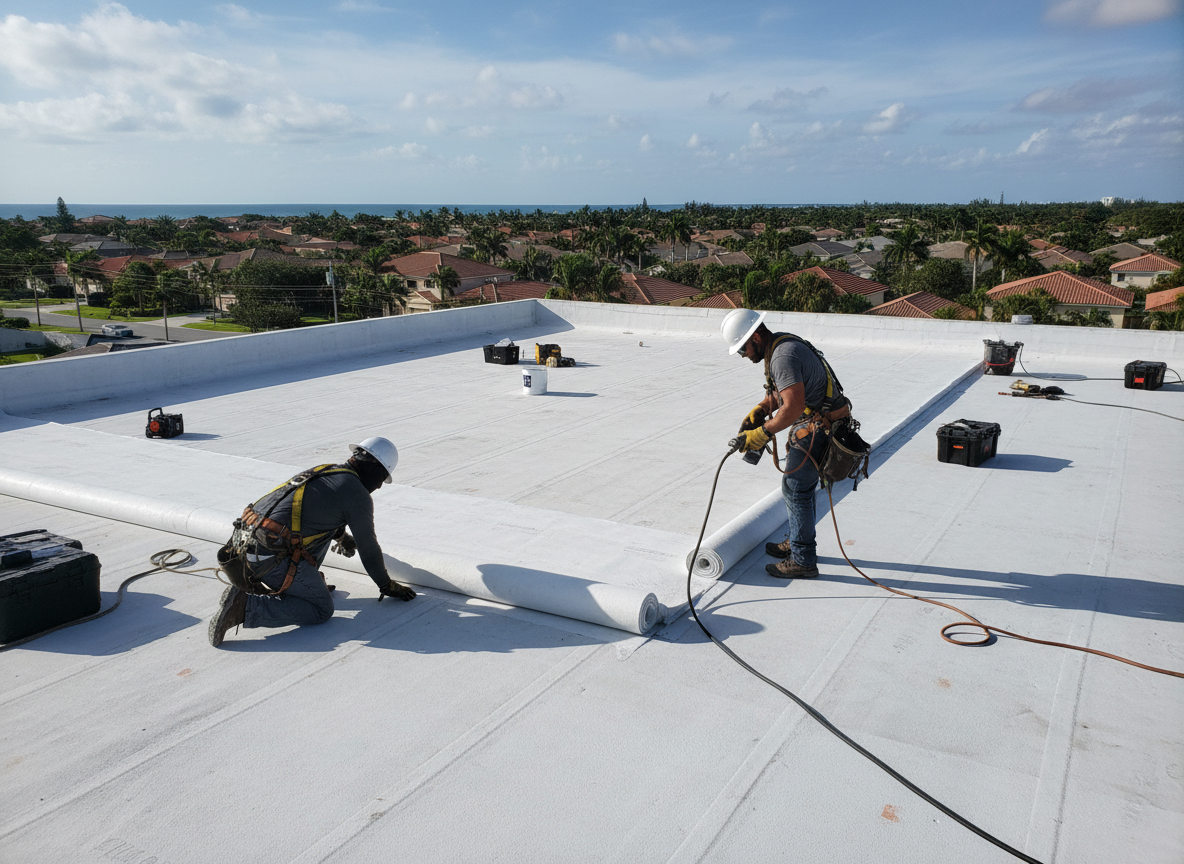
Cutler Bay commercial buildings sit on flat or low-slope roofs that must handle intense summer downpours and hurricane-force winds. BravikMend crews at 20507 S Dixie Hwy focus on single-ply membranes and modified bitumen systems that meet Miami-Dade County product approval lists for high-velocity hurricane zones. Edge details around HVAC curbs, parapets, and scuppers receive extra attention because standing water collects quickly on the limestone-rich soil that limits natural drainage around South Dixie Highway properties.
Many strip centers and medical offices built in the 1980s and 1990s in Cutler Bay use gravel-surfaced built-up roofs that now show seam failure after repeated thermal cycling. Replacement work requires removing old ballast, installing new insulation to current R-value minimums, and tying into existing lightning protection without voiding the county notice of acceptance. Crews schedule around afternoon thunderstorms that can drop two inches of rain in thirty minutes, using temporary tie-ins to keep tenant spaces dry during multi-day projects.
Access on narrow commercial lots along Old Cutler Road or Franjo Road often limits crane placement, so material staging happens at ground level with conveyor belts to the roof edge. Positive drainage modifications are added whenever possible because the water table stays high and roof ponding quickly leads to interior mold in humid conditions. All work follows the current Florida Building Code wind-load tables specific to the Cutler Bay exposure category.
Seasonal Storm Preparation
Before hurricane season, commercial property managers request seam audits and coating refreshes on existing membranes. These checks catch fastener back-out caused by daily expansion on dark surfaces and allow targeted repairs before winds arrive.
Drainage and Ponding Issues
Low areas near HVAC clusters are common on Cutler Bay commercial roofs. Adding tapered crickets and additional drains prevents water from sitting against flashings for weeks during the wet season.
Technician insight
In Cutler Bay the thing that catches most people out with Commercial Roofing is how quickly ponding develops on the flat limestone terrain after a three-inch rain, especially around HVAC clusters where original scuppers were never sized for today's storm intensity.
Medical Office Roof Replacement
A single-story medical building near Franjo Road showed repeated interior leaks after summer storms. Infrared scans located wet insulation along the north parapet where the original modified bitumen had tented at the edge. Crews removed the wet sections, added tapered insulation for positive flow to new oversized scuppers, and installed a reinforced TPO membrane secured to meet current Miami-Dade wind ratings. The tenant spaces stayed dry through the next wet season.
How it works
- 1
Site Assessment
Walk the roof with infrared moisture scan and core samples to map wet insulation and existing assembly details.
- 2
Code and Drainage Review
Check Miami-Dade NOA listings and calculate required uplift ratings while noting all scuppers, leaders, and overflow paths.
- 3
Material and Attachment Plan
Select membrane type and insulation layout that satisfies current wind-load tables for the building's exposure.
- 4
Installation and Daily Tie-In
Install new system with temporary weather protection at the end of each day to handle sudden Cutler Bay thunderstorms.
- 5
Final Inspection and Documentation
Complete county-required inspections and provide as-built photos plus maintenance recommendations.
Pricing
Pricing reflects roof size, existing assembly condition, drainage modifications, and material uplift ratings required in Miami-Dade County.