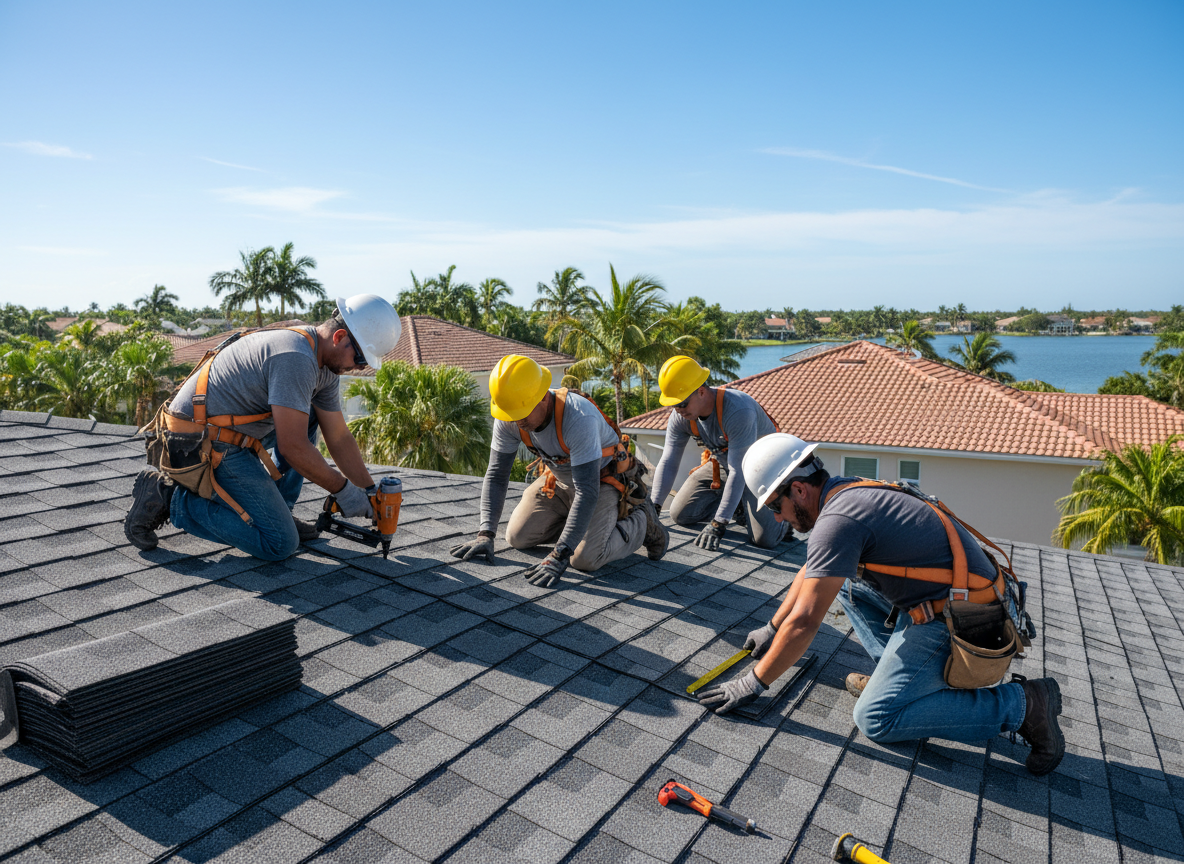
Cutler Bay homes often date from the 1970s through 1990s and carry barrel tile or asphalt shingle roofs that must meet current Miami-Dade County high-velocity hurricane zone requirements. Proper deck inspection reveals rot from prior leaks or poor ventilation before new underlayment and flashing go down. Salt-laden air accelerates corrosion on metal components, so stainless or coated fasteners and ridge vents rated for 150 mph winds become standard choices during installation.
Afternoon thunderstorms arrive almost daily in summer and can halt work for hours, forcing crews to secure partial roofs with weighted tarps each evening. Older homes near the canal systems frequently show uneven rafters from settling soil, requiring sistering or shimming before sheathing. We also check for inadequate soffit intake that traps moisture under new insulation, a common issue that shortens roof life in the humid Cutler Bay climate.
Tile roofs demand careful underlayment selection because the weight adds load to aging trusses already stressed by decades of heat cycles. Flashing around chimneys and skylights must integrate with the existing stucco walls common in the area to prevent water intrusion during the next heavy rain event. Every installation includes ice-and-water shield along eaves and valleys plus ridge ventilation sized to the attic volume to reduce humidity buildup.
Homeowners sometimes overlook the need to coordinate with electrical and HVAC penetrations when adding a new roof layer. We route new pipes and vents through the deck before shingles or tiles are laid so no cuts occur afterward that could create leak points. This sequence keeps the finished roof watertight even when the next tropical system moves through Miami-Dade County.
Technician insight
In Cutler Bay, the thing that catches most people out with Roof Installation is the combination of older 1970s-1990s trusses that have settled unevenly near the canals and the daily summer storms that force crews to tarp partial roofs every afternoon. Skipping extra deck reinforcement or proper ridge venting here almost always leads to callbacks within two seasons.
Tile Roof Replacement After Settling
A Cutler Bay home near the C-102 canal showed sagging tiles and interior leaks after years of humidity and minor settling. We found several rafters that had twisted and needed sistering plus new plywood where water had softened the deck. After installing new underlayment, impact tiles, and additional ridge vents, the roof passed inspection and has stayed dry through multiple heavy rain events.
How it works
- 1
Initial Assessment
We inspect the existing deck, rafters, and ventilation on site in Cutler Bay to identify rot, settling, or code gaps before any materials arrive.
- 2
Material Selection
We match impact-rated shingles or tiles to the home's wind zone and discuss underlayment and ventilation options suited to local humidity and salt exposure.
- 3
Deck Preparation
Old roofing is removed, damaged sheathing replaced, and rafters sistered where needed to meet current Miami-Dade load requirements.
- 4
Installation and Sealing
Underlayment, flashing, and final covering are installed with attention to ridge vents and penetrations, followed by a final walkthrough before cleanup.
Pricing
Cost depends on square footage, chosen materials, deck repairs, and access; we provide an upfront written quote after the on-site assessment.