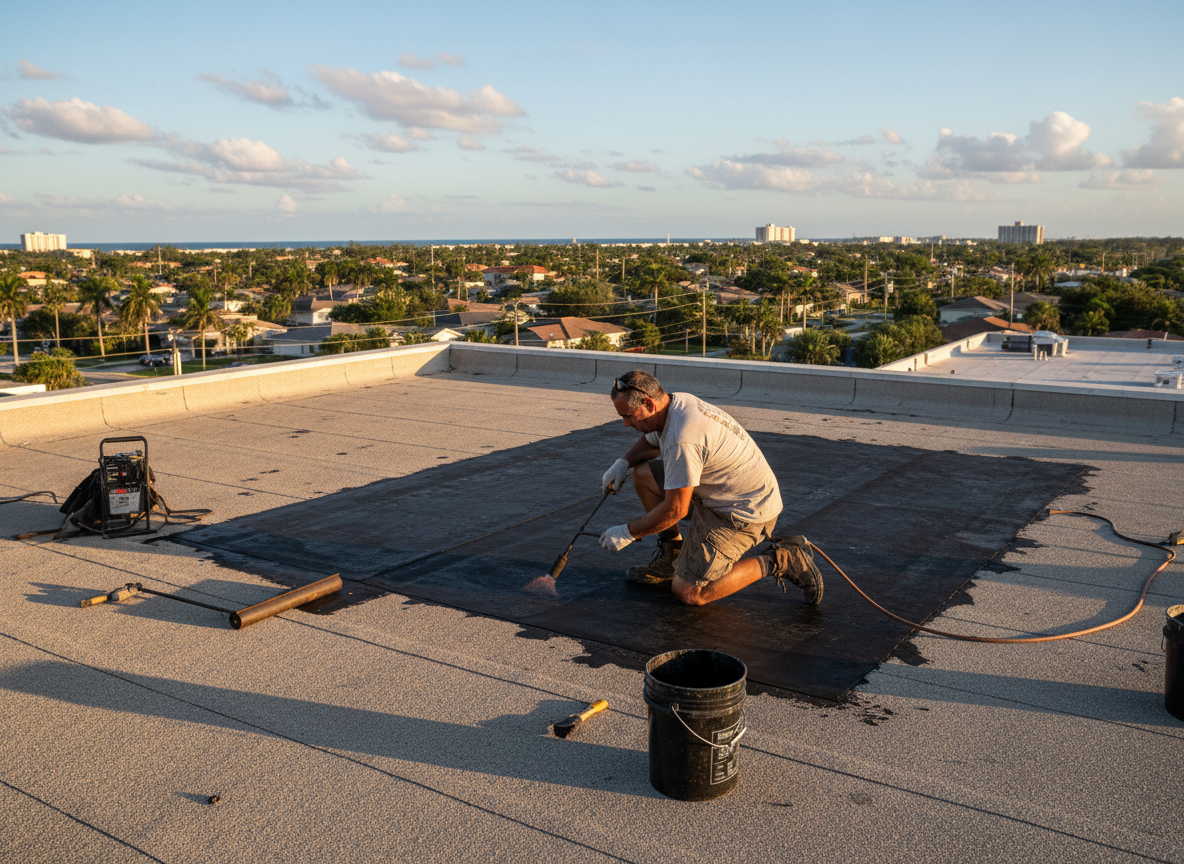
Flat roofs in Cutler Bay homes and small commercial buildings often use modified bitumen or single-ply membranes that face constant exposure to intense sun and sudden downpours. Standing water collects quickly during the wet season because many properties sit on flat lots with limited drainage slope. Technicians check for seam separation and blistering along parapet walls where expansion happens daily from heat.
Miami-Dade County wind-load requirements affect every repair. Crews replace sections with reinforced materials that meet current uplift standards rather than patching old layers that have already stretched. Edge flashings near HVAC curbs need extra attention because vibration loosens fasteners over time and lets water track under the membrane.
Ponding near scuppers or internal drains is the most frequent call. Workers clear debris, re-slope tapered insulation where possible, and install new drain inserts instead of simply adding sealant that fails within one season. Homeowners notice the difference when heavy afternoon storms no longer produce interior leaks.
Older flat-roof sections built before updated codes often lack proper underlayment at the perimeter. Repair crews remove loose gravel or ballast, inspect the deck for rot, and install new termination bars with compatible caulking to stop wind-driven rain from entering the building envelope.
Technician insight
In Cutler Bay the thing that catches most people out with flat roof repair is how fast ponding water develops on the many zero-slope sections built on fill lots near Old Cutler Road. Homeowners think a small seam split is cosmetic until the next tropical downpour pushes water under the membrane and into the ceiling. Checking the scuppers and making sure the new patch slopes toward the drain changes the whole outcome.
Ponding Leak Near HVAC Curb
Water entered a Cutler Bay townhome ceiling after repeated afternoon storms. Inspection showed the membrane had pulled away from the curb base and the original sealant had cracked. Crews removed the loose section, installed a new reinforced patch with proper termination, and added a small tapered piece to direct flow to the existing scupper. No further leaks appeared after the next heavy rain.
How it works
- 1
Initial Inspection
Technician examines the entire roof surface, checks seams, flashings, and drainage points from the provided address in Cutler Bay.
- 2
Damage Assessment
Identify membrane type, locate active leaks or ponding areas, and note any deck deterioration visible from above.
- 3
Material Selection
Choose compatible patch or replacement membrane that matches existing system and satisfies local wind requirements.
- 4
Repair Execution
Clean surface, apply new membrane section or coating, secure edges, and test drainage before leaving the site.
- 5
Final Walkthrough
Review completed work with owner and explain any follow-up checks needed after the next heavy rain.
Pricing
Cost depends on roof size, extent of membrane damage, and whether tapered insulation or new drains are required.